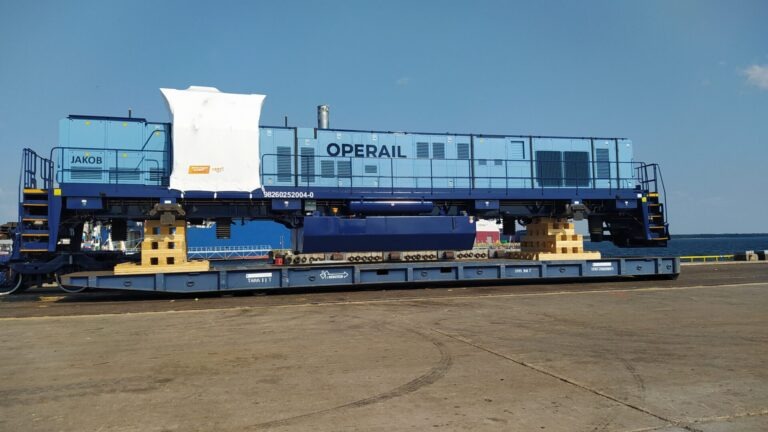
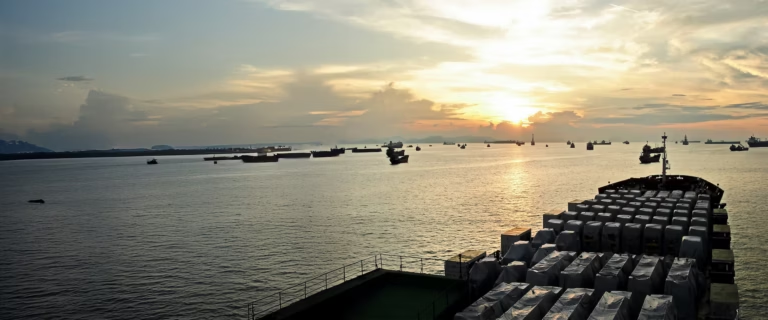
Sea transport is a cost-effective way to move large shipments. We arrange business-to-business (B2B) container transport and project cargo on routes starting or ending outside the European Union. Our main destination markets are Asia–Estonia (especially China–Estonia), as well as the USA, Türkiye, the United Kingdom, and other non-EU destinations. We offer full-container-load (FCL) and less-than-container-load (LCL) shipments. We carry standard goods, dangerous goods (IMO / IMDG), and oversized cargo. We do not offer temperature-controlled transport.
In addition to sea transport, we provide pre- and on-carriage with container trailers and trucks. We also offer ro-ro transport for project and special shipments. As a customs agency, we provide customs clearance and resolve related issues. Sea transport, customs, and cargo insurance from a single company – fewer parties involved, fewer errors, and smoother movement of goods.
Our service covers the entire organisation of sea transport – planning, monitoring world market prices, bookings, customs clearance, and consultation. Long-term partners in China, the USA, and elsewhere in the world enable swift communication and the ability to find flexible solutions.
We carry out both regular container shipments (FCL/LCL) and ro-ro transport for project and special cargo. We track the shipment throughout the process and keep the client up to date on any significant changes.
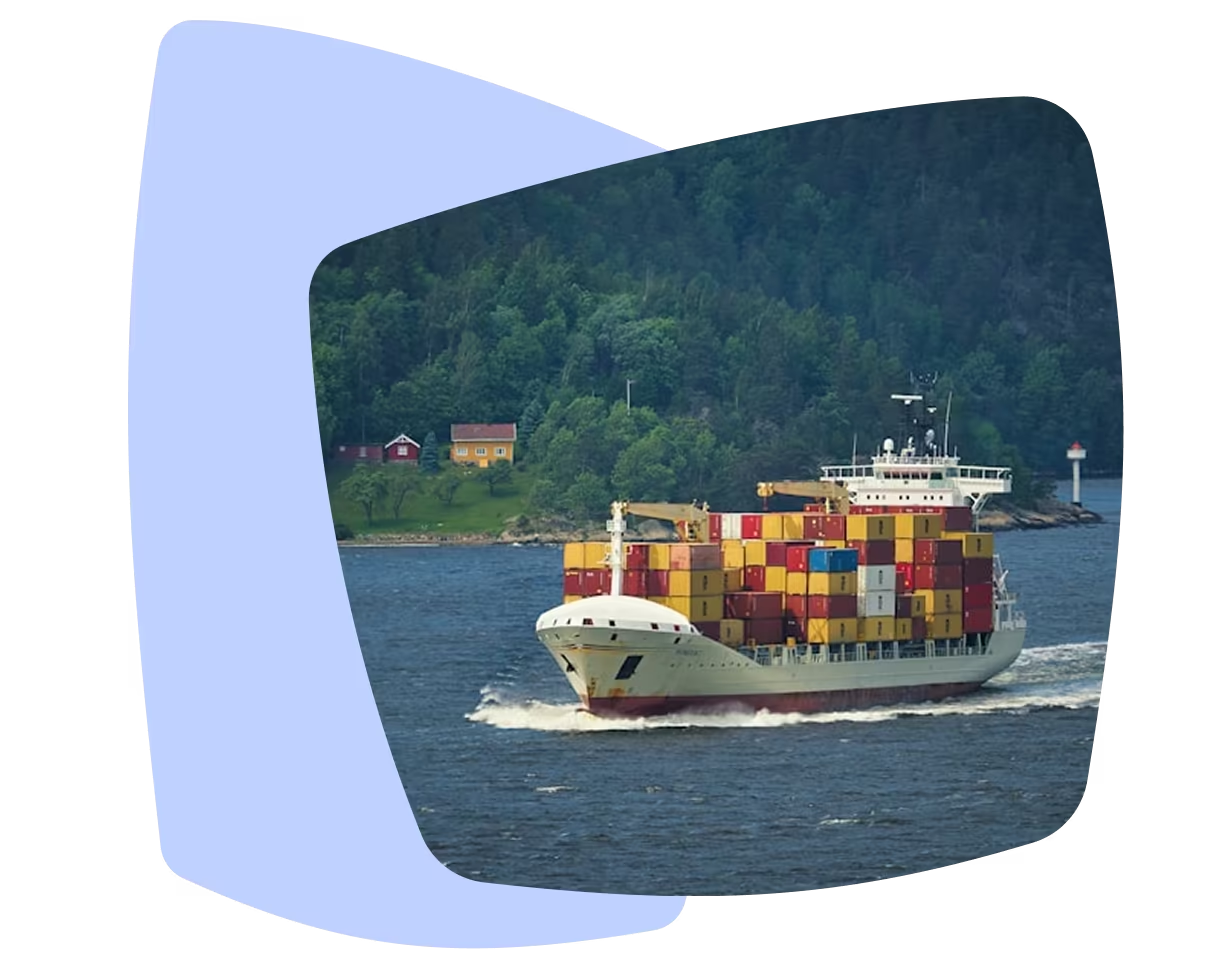
Our company was born from the desire to offer Estonian exporters and importers a more flexible and reliable sea transport service. From the very beginning, we have built partnerships in which logistics is not simply a cost item, but strategic support – from planning procurement and purchasing to organising exports and supporting sales processes.
Over the years, we have grown together with our clients, expanding our sea transport services from FCL and LCL container shipments and project cargo into a full service that also includes ro-ro transport. The service portfolio also covers customs clearance and cargo insurance. Our strength lies in non-EU destinations and practical experience managing international freight flows.
Today we serve industrial, manufacturing, and trading companies as well as public-sector bodies that need a reliable and experienced partner for their non-EU export and import sea shipments. We don’t just arrange transport – we help make well-considered and workable decisions across the entire sea transport process.
We work with you to choose a suitable solution based on the type, dimensions, weight, and time-critical nature of the goods.
We advise when it makes sense to use FCL or LCL container shipping and when ro-ro transport is the right solution.
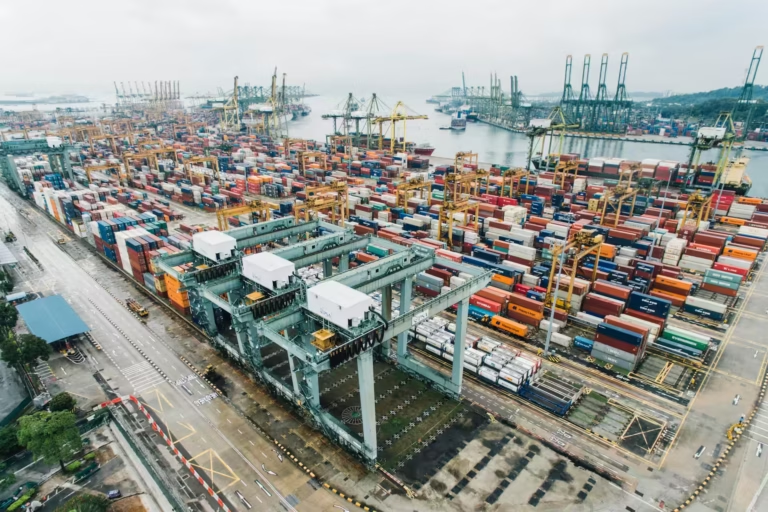

We regularly arrange sea transport across the borders of the European Union – both for export and import. With FCL and LCL container shipments, we move most standard cargo that does not exceed the internal dimensions of 20- and 40-foot containers. For rolling, heavy, and oversized cargo, we use flat-rack containers or ro-ro transport.
We monitor departure schedules, coordinate the transport process, and plan customs clearance based on each specific shipment. We give the client an indicative overview of the transit time and recommend suitable solutions based on the nature of the goods and the route.
| Destination market | Main ports of origin (TOP TEU) | Ports of arrival (Estonia) | Service type | Indicative transit time* |
|---|---|---|---|---|
| China | Shanghai, Ningbo, Shenzhen, Guangzhou, Qingdao | Muuga, Paldiski | FCL / LCL / Break Bulk / Ro-Ro | ~30–50 days |
| USA | Los Angeles, Long Beach, New York / New Jersey, Savannah, Oakland | Muuga, Paldiski | FCL / LCL / Break Bulk / Ro-Ro | ~25–40 days |
| Türkiye | Ambarlı, Mersin, Aliağa, İzmit (Kocaeli), Tekirdağ | Muuga, Paldiski | FCL / LCL / Break Bulk / Ro-Ro | ~10–25 days |
| United Kingdom | Felixstowe, London Gateway, Southampton, Liverpool, Immingham | Muuga, Paldiski | FCL / LCL / Break Bulk / Ro-Ro | ~7–14 days |
* Transit times are indicative and calculated from the actual ship departure time at the port of origin (ETD).
The actual transit time may vary depending on the port of departure, shipping line, transhipments, seasonality, and port and customs processes.
We carry out sea transport outside the European Union – both imports into Estonia (e.g. sea transport from China to Estonia) and exports from Estonia (e.g. sea transport to the USA). We arrange FCL and LCL container shipments and also offer ro-ro transport. We carry standard goods, dangerous goods (including batteries, energy storage units, and other IMO / IMDG goods), and oversized shipments. We help with communication with foreign shippers and consignees. As a customs agency, we also support communication with the Estonian Tax and Customs Board and other authorities.

Practical sea transport guidance for smooth imports and exports. We compare transport types, explain customs procedures, and share best practices for using Incoterms delivery clauses.

We carry out non-EU sea transport, both inbound to Estonia and outbound from Estonia. We move most standard cargo as FCL and LCL container shipments. Ro-ro transport is suitable for rolling cargo as well as oversized and heavy shipments.
Below we answer frequently asked questions, from choosing the right mode of transport to selecting the right Incoterm. If you don’t find an answer or your shipment is still being planned, feel free to contact us. We can help even when not all the input data is yet available, and provide an indicative estimate and practical advice when needed.
The choice of a suitable sea transport mode depends on the nature of the goods (whether they are standard goods or dangerous goods, i.e. IMO cargo), volume, weight, and dimensions. For standard goods, container shipping is most commonly used – either full-container-load (FCL) or less-than-container-load (LCL). FCL is suitable for larger volumes of goods, while LCL is suitable for smaller shipments that do not fill an entire container.
For special solutions, specialised containers (open top and flat rack) are used. Ro-ro transport is also suitable for very large and heavy shipments. When choosing the mode of transport, we also take into account the route, shipping line restrictions and specifics, and the Incoterms delivery clause, in order to find a technically and economically justified solution.
Our sea transport services are aimed only at business-to-business (B2B) shipments. We arrange sea transport where a classic sales transaction has taken place between two companies and where both the sender and the recipient of the goods are legal entities.
We do not offer sea transport services to private clients. We recommend that private clients turn to international moving companies that specialise in arranging shipments and relocations for private individuals.
When importing into Estonia, the choice of Incoterm is particularly important, as it directly affects the final price of the goods and the risks involved. Sellers from more distant countries of origin (especially China and Asia) very often offer CIF or another Incoterm beginning with C, which the Estonian buyer accepts without realising what it means. Although the transport price may seem attractive, it covers only part of the actual transport costs, and the charges applied at the customs terminal of the destination port depend on the shipping line and partners chosen by the seller. This often leads to unexpected additional costs, making the import significantly more expensive overall. When exporting from Estonia, the Incoterm also plays a decisive role in terms of competitiveness.
We work every day with successful Estonian and Scandinavian importers and exporters, and we share best practices for both import and export. The correctly chosen Incoterm helps keep transport costs under control, avoid unnecessary risks, and ensure that the transport process is transparent and reasonable for both parties.
In sea transport, correct documentation is the foundation for a smooth transport process and customs clearance. The main documents are the bill of lading, the commercial invoice, and the packing list. Depending on the goods and the destination country, these may be supplemented by a certificate of origin, safety certificates, or other specific documents. For the transport of dangerous goods (IMO / IMDG), additional documents are required, such as the MSDS, sea-transport-specific safety certificates and, where necessary, UN 38.3 test requirements. Data accuracy is critically important – errors or missing information can mean delays at the customs terminal.
Incomplete documentation often leads to additional costs and complex follow-up requirements, and may prevent the goods from being correctly declared. We help check that the documents are in order, communicate with foreign shippers, and support communication with the Estonian Tax and Customs Board, so that document preparation is suitable for sea transport and meets customs expectations.
Yes, we also arrange sea transport for dangerous goods (IMO / IMDG), including energy storage units, equipment containing lithium-ion batteries, and other goods belonging to dangerous goods classes. Such shipments are subject to additional requirements for packaging, marking, and documentation, and the transport must be coordinated with the shipping line in advance.
ETS Logistics does not offer transport of dangerous goods belonging to DGR (dangerous goods) classes 1, 3, 6, and 7. For the transport of dangerous goods, we help assess whether the specific cargo is suitable for sea transport and advise on the necessary documents (e.g. MSDS and UN 38.3 test requirements), so that the transport meets the applicable safety requirements.
Practical steps for smooth imports/exports: comparisons of transport types, customs checklists, and case studies.